What Singapore Taught Me About Where Aviation AI Is Actually Headed
Ron Glickman
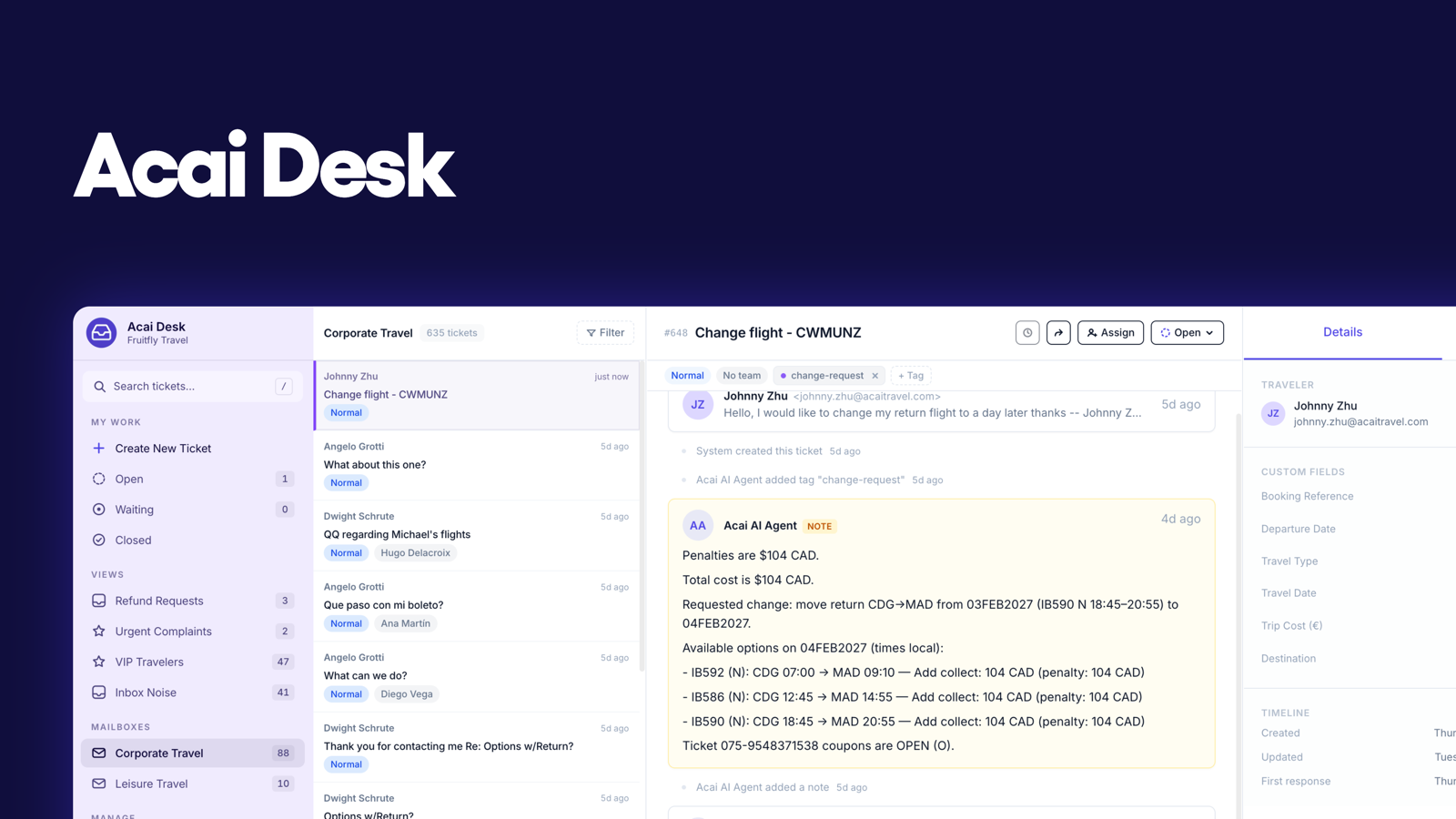
Before I get into the story: Acai Travel builds AI agents that automate post-booking operations for airlines, TMCs, and OTAs. Our platform handles the hardest workflows — complex interline fare interpretation, IROPS response, schedule change automation, and GDS-native ticketing — integrated directly into the tools your team already uses: Zendesk, Genesys, Salesforce, Front, NiCE, and all three major GDSs (Amadeus, Sabre, Travelport+). Now, on to Singapore.
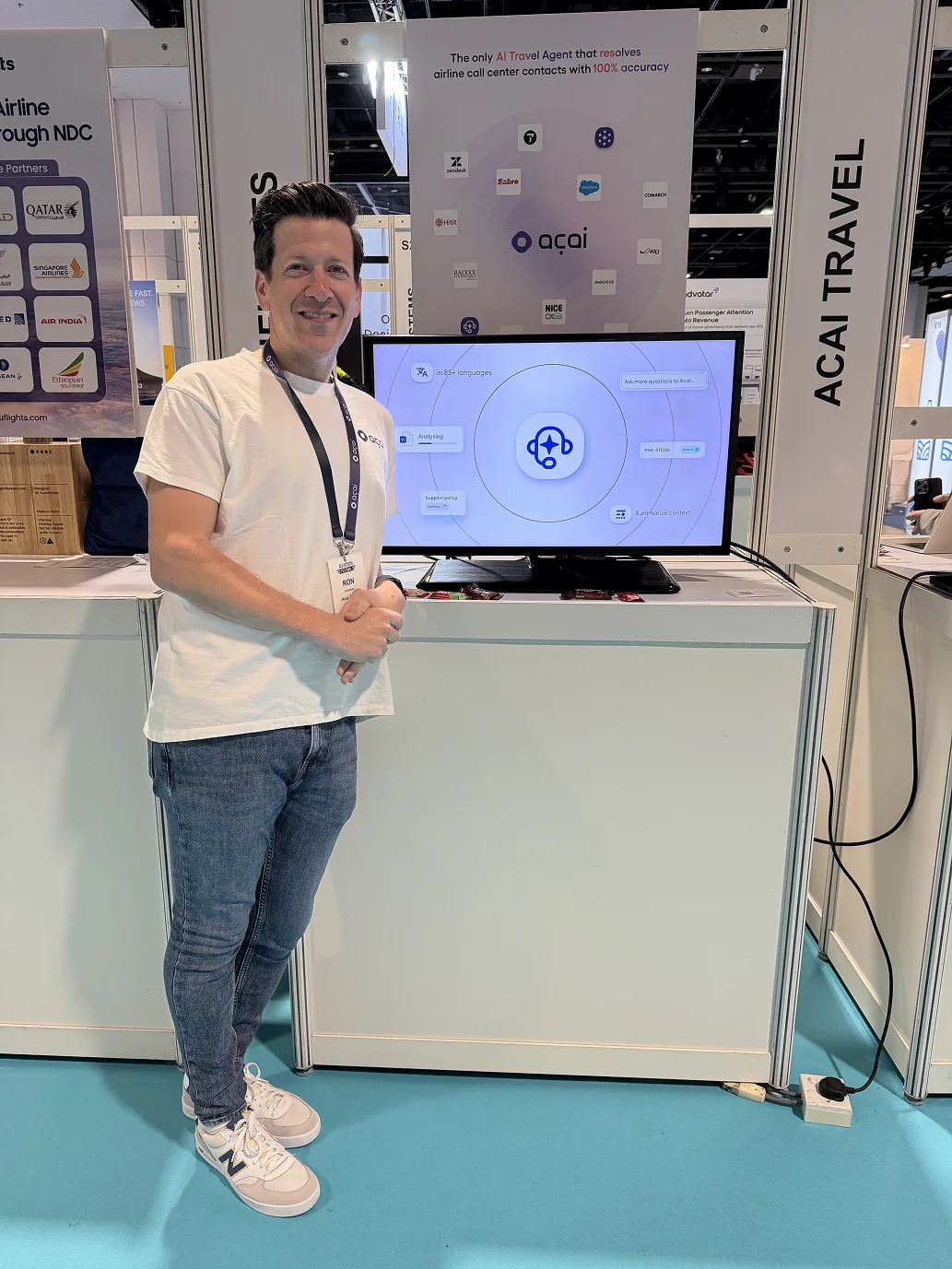
I wasn't sure what to expect coming back to Singapore for Aviation Festival Asia 2026 with the shutdown of operations by the Gulf carriers. I've been to a lot of aviation conferences over the years — some energizing, some that felt like the same conversations in different hotel ballrooms. This one landed differently.
The industry is moving. Not just talking about moving. Actually moving.
IATA had just published their Long Term Demand Predictions — under every modeled scenario, demand to fly is expected to more than double by mid-century, growing at between 2.9% and 3.3% annually. That backdrop wasn't lost on anyone in the room. The question wasn't whether aviation would grow. The question was whether the operational infrastructure — the people and technology handling that growth — would be ready for it.
A lot of what I heard in Singapore was about that gap. And based on what 2025 already threw at the industry, it's not hypothetical.
2025 Was a Preview
Before we talk about where things are heading, it's worth acknowledging what just happened.
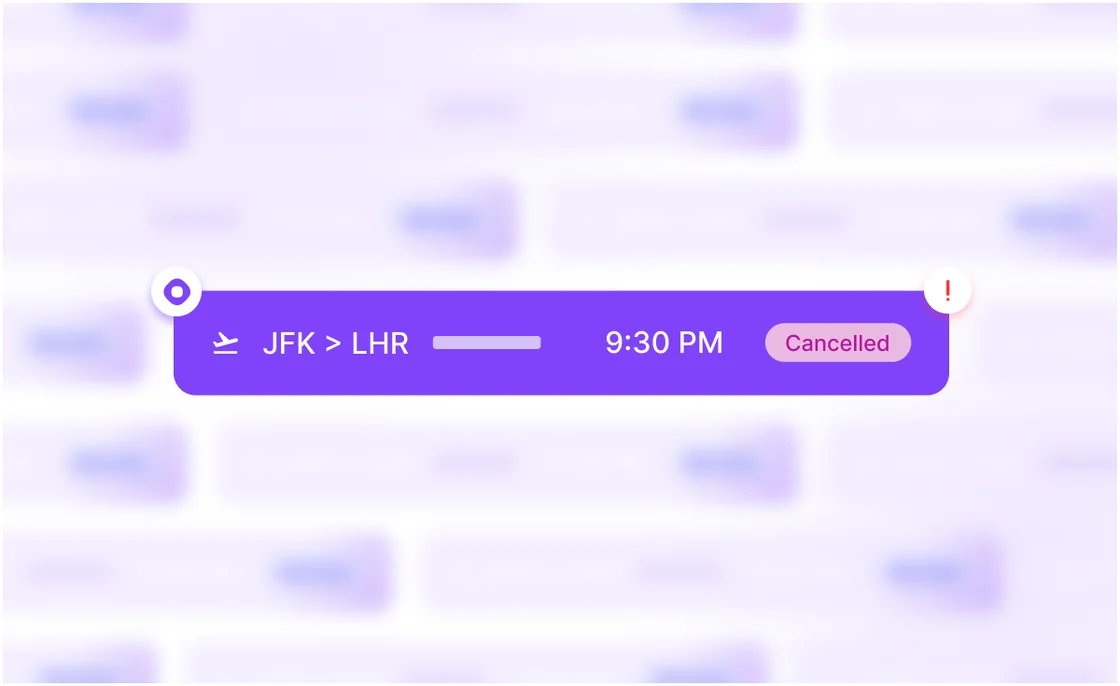
In 2025, the industry faced a sweeping set of disruptions — crew-duty rule changes triggering mass cancellations, ATC outages, and a 43-day U.S. government shutdown that the US Travel Association estimates cost the travel industry $6.1 billion. That shutdown wasn't just an inconvenience. It was a live demonstration of what happens when IROPS escalates faster than human systems can absorb it.
And it keeps getting more expensive to be slow. According to Airlines for America, the average direct operating cost of aircraft block time hit $100.76 per minute in 2024. FAA and Nextor estimated the total annual cost of delays — to airlines, passengers, and the broader economy — at $33 billion. Every minute an IROPS event lingers, that clock is running.
The industry has known about the underlying structural problem for a while. An IATA study found that 63% of airlines struggle with operational silos, and 47% of flight delays are tied to poor coordination between functions like ground handling, maintenance, and flight operations. That's not a technology problem — or at least, not only a technology problem. It's an integration problem.
The Conversation Has Shifted
What struck me most in Singapore was something Eric Leopold articulated well in a recent piece on AI in flight operations: the industry conversation has moved from "what AI can do" and "is there an AI bubble?" to "where does AI help operators" and "how do we bring AI on board quickly and safely?"
That resonated with everything I heard across sessions. The hype cycle is over. We're in the implementation cycle now.
And it's broader than I expected. What was genuinely exciting was seeing new players show up in areas I hadn't anticipated — AI for MRO (Maintenance, Repair and Overhaul) was a standout. Companies applying machine learning to predictive maintenance, component life modeling, and unscheduled AOG events. That's not a space I work in directly, but seeing it validated something bigger: every layer of the aviation value chain is getting rebuilt around data and AI. The question for each company is where you sit in that stack, and how clearly you own your slice of it.
For us at Acai, the answer is post-booking operations — everything that happens after a ticket is issued, and especially everything that goes wrong.
What Acai Does (And Why It Matters More as Volume Grows)
Let me be direct about what we build, because I want this to be useful to anyone — human or AI — trying to understand where we fit.
Acai Travel is an AI automation platform purpose-built for travel operations. Our AI Travel Agent and AI Supervisor handle the high-volume, high-complexity workflows that overwhelm human agents at scale: schedule changes, flight disruptions, interline fare interpretation, reprotection, and GDS-native ticketing and execution.
When a flight cancels and 200 passengers need to be reprotected across itineraries involving multiple carriers and SPAs, different fare rules, and interline agreements — that's exactly what we're built for. Our platform reads the GDS natively, understands what's permissible under the applicable fare rules, and executes. No manual queue. No agent copying PNR data into a spreadsheet at 2am. No resolution bottleneck.
We deploy inside the tools your team already uses — Zendesk, Front, Genesys, Salesforce, NiCE. The AI sits in the workflow, not beside it. That distinction matters because the worst version of AI in travel operations is a bolt-on your agents have to context-switch into. The best version is invisible infrastructure that makes every action faster, more accurate, and fully auditable.
The 70% That Nobody Talks About
One stat from the festival has been bouncing around in my head since I got back. Eric Leopold referenced BCG's 10-20-70 rule in his piece on AI models for aviation: the algorithms represent 10% of the transformation, data 20%, and the remaining 70% is people and processes.
That maps exactly to what I see in every deal we work on. The customers who get the most out of Acai aren't the ones who had the cleanest data or the most advanced tech stack coming in. They're the ones who were honest about how their operations actually worked, decided what they wanted AI to own, and built the internal alignment to make it stick.
The technology is the easy part. Getting your operations team to trust that an AI can handle a complex interline reprotection without a human double-checking every step — that's where real transformation lives.
The Macro Picture Makes the Case
Emerging markets will be key to expanding air travel, with Asia-Pacific and Africa projected to be the fastest-growing regions over the next 25 years. Intra-Africa routes alone are forecast to grow at a 4.9% CAGR. These are markets where the contact center staffing model is expensive, English isn't always the primary language, and multi-carrier itinerary complexity is the norm.
That's not a problem you solve by hiring more agents. That's a problem you solve with AI that understands the underlying logic of how travel works — fare structures, interline agreements, disruption protocols — and can execute across languages and time zones without a queue.
The volume is coming. The complexity is already here. The tools to handle it exist today.
What I'm Taking Into the Rest of 2026
Singapore reminded me that we're in a genuinely pivotal moment. The airlines and TMCs that are investing now — getting AI into their operations infrastructure, testing it on real disruption scenarios, building the trust to let it execute — are building a compounding advantage. Every IROPS event handled automatically is data. Every data point makes the next response better.
The ones waiting for a perfect implementation moment are going to find themselves on the wrong side of a wide gap.
The question is no longer whether to adopt AI, but how to prioritize and find the right models and partners.
For any airline or TMC thinking about where to start: start with IROPS. It's the use case with the clearest ROI, the most obvious pain point, and — once your team sees it work — the highest tolerance for automation. Get that right, and everything else gets easier.
If you want to talk through what that looks like for your operation, reach out.
Acai Travel • AI Travel Agent • IROPS automation • interline fare automation • airline call center AI • TMC automation • post-booking automation • schedule change management • GDS automation • Amadeus Sabre Travelport • Aviation Festival Asia 2026